How to Measure and Interpret VO₂ Max for Tactical Athletes
Assess, Understand, and Apply Your VO₂ Max to Drive Performance and Longevity
Introduction
In the previous article, we explored how to train VO₂ max sustainably. Knowing how to train VO2 max is essential—but having a basic understanding of how to measure it and interpret your results is also important for tracking progress over time. The key isn’t necessarily having the most precise value—it’s using consistent, repeatable methods that help guide your long-term development.
This article will cover:
- Methods for measuring VO₂ max
- Strengths, limitations, and costs of each approach
- VO2 norms by age and sex
- Where tactical athletes should aim for performance and longevity
How to Test VO₂ Max
VO₂ max testing can be divided into three main categories—laboratory testing, field testing, and wearable estimates. Each method has its strengths and limitations, but the key is consistency—stick with one approach and repeat it over time to ensure reliable, comparable results over time.
- Laboratory Tests
The most accurate way to measure VO₂ max is through cardiopulmonary exercise testing—a lab-based assessment where you run on a treadmill or cycle while wearing a mask that analyzes how much oxygen you consume and how much carbon dioxide you produce.
This method provides a detailed look at your cardiorespiratory system. It’s the gold standard for precision, but that level of accuracy comes at a cost—both financially and logistically. Each test typically costs a few hundred dollars, requires specialized equipment and trained staff, and takes more time than most athletes can regularly commit to.
For most tactical athletes, a laboratory test isn’t necessary for routine tracking, but it can be valuable for gaining a comprehensive view of cardiorespiratory fitness or validating results from other testing methods.
- Field Tests
Field tests offer a practical and cost-effective way to estimate VO₂ max in the same environments where tactical athletes train and operate. They typically require a maximal or near-maximal effort and use validated prediction equations to estimate oxygen uptake. While not as precise as laboratory testing, they provide an excellent way to monitor meaningful progress over time.
Field tests have a lot going for them. They’re free, simple to set up, require little more than space to run and a stopwatch, and have long been proven reliable for estimating aerobic fitness. Their low cost and accessibility make them ideal for tactical athletes who want meaningful feedback without needing a lab.
Because field tests aren’t controlled to the same degree as laboratory testing, it’s important to keep conditions as consistent as possible. Environmental factors such as heat, altitude, and terrain can all influence results, so perform tests under similar conditions whenever you can. Below are a few common field tests used to estimate VO₂ max:
- Cooper 12-Minute Run Test — Run as far as possible in 12 minutes. Distance covered is entered into a validated equation to estimate VO₂ max. Calculate your score →
- 1.5-Mile Run Test — Run 1.5 miles as quickly as possible. Time to complete is used in an equation to estimate VO₂ max. Calculate your score →
- Rockport Walk Test — Walk 1 mile as fast as possible and record time and heart rate at completion. Suitable for beginners or lower-fitness individuals. Calculate your score →
- Wearables
Modern wearables like Garmin and Coros estimate VO₂ max using pace, heart rate, and proprietary algorithms. While they don’t provide a direct measurement and are generally less accurate than lab or field tests, they offer a practical way to track long-term progress and monitor how your aerobic system adapts to training.
Their biggest advantage is convenience—wearables provide continuous feedback and make it easy to identify trends over time. However, algorithm accuracy varies across brands, so the exact VO₂ max value you see may not be precise. The good news is that most devices are internally consistent, meaning they’re reliable for tracking change. When used regularly, wearables can provide meaningful insight into aerobic fitness. Most advanced models range from $200 to $1,000.
VO₂ Max Norms by Age and Sex
After completing a VO₂ max test, you’ll receive a value expressed in milliliters of oxygen per kilogram of body weight per minute (mL O₂/kg/min). On its own, that number doesn’t tell you much—you need context to understand what it means.
The FRIEND Registry provides one of the most comprehensive datasets of cardiorespiratory fitness reference values available1. Below is a condensed version of those norms, showing VO₂ max percentiles by age and sex to help you interpret your results.
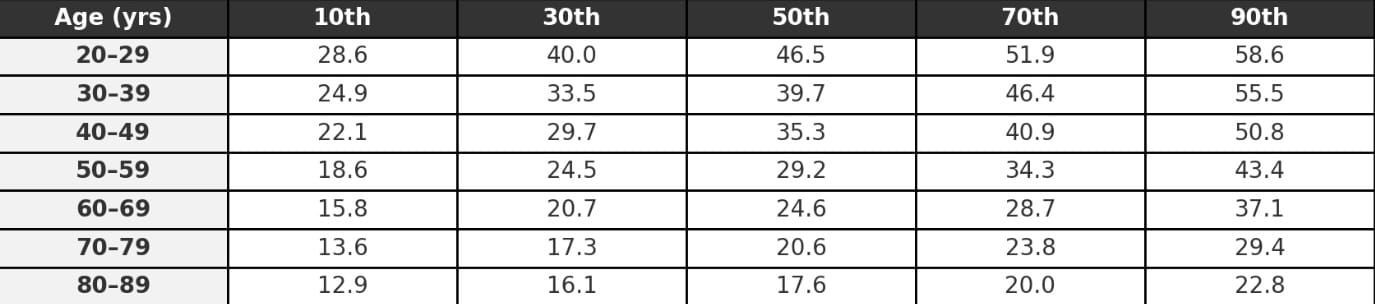
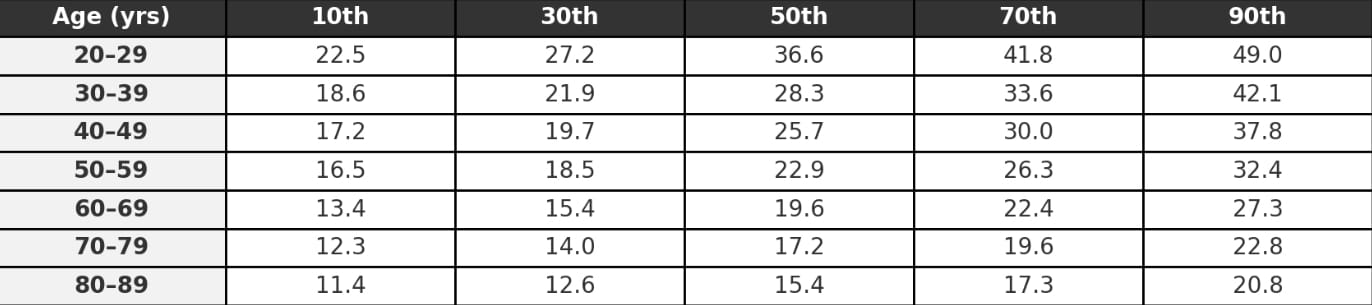
If you’re not familiar with percentiles, they describe where you fall within a broader population. They’re used in many contexts—from academic test scores to physical performance metrics—to show how one individual compares to others. For example, being in the 75th percentile for VO₂ max means your aerobic fitness is higher than about 74% of people your age and sex.
Note: The percentiles shown above are based on treadmill test results rather than cycle ergometer data. While the bike results were similar, I chose the treadmill data because it better reflects the movement patterns most relevant to tactical athletes. VO₂ max values also tend to be slightly higher on a treadmill since more muscle groups are involved—unless you’re a trained cyclist, in which case cycling values may be higher. Either way, the difference is minimal and not worth overanalyzing.
What Tactical Athletes Should Aim For
For the general population, being at the 50th percentile represents average cardiorespiratory fitness for one’s age and sex. Tactical athletes, however, operate in environments where average fitness isn’t good enough. As discussed earlier, cardiovascular fitness is a cornerstone of tactical performance, making it essential to cultivate at a high level.
Here’s how I recommend framing cardiorespiratory fitness goals:
- Aim for the 90th percentile or higher for your age and sex.
- If you’re already there, strive to maintain the VO₂ max expected of someone a decade younger. This is completely achievable with intelligent training.
I know there will be readers—especially strength-focused athletes—who believe these standards are unrealistic or that achieving this level of cardiorespiratory fitness means they can’t also be strong. I’m here to tell you that’s largely untrue. You can reach the 90th percentile in aerobic fitness and still be incredibly strong. As I’ve discussed in previous articles, you might need to leave a bit of absolute strength potential on the table to get there—but you can still be exceptionally strong and highly aerobically fit at the same time. Remember, well-rounded fitness is key for successful tactical performance and healthy aging.
The same principle applies in reverse. If you’re more endurance-focused, it’s equally important not to pour all of your training efforts into improving aerobic capacity at the expense of other critical qualities like strength and power. As a general rule, if you’re naturally strong in one area, you’ll often see the greatest overall improvement in performance by developing your weaknesses.
Note: VO₂ max can begin to decline as early as your 30s if not offset by consistent aerobic training, with the rate of decline accelerating with age². Building a high aerobic ceiling early in life not only enhances immediate performance but also provides a valuable buffer against that natural decline—assuming you continue to train consistently throughout your life. The higher your peak fitness when you’re young, the more capacity you’ll retain as you age, allowing you to maintain independence and perform the activities that matter most to you for decades to come.
Conclusion
Testing VO₂ max doesn’t have to be complicated. Laboratory tests offer unmatched precision, field tests strike a balance between practicality and accuracy, and wearables provide valuable long-term trend data. Whatever method you choose, consistency is what matters most. Hold yourself to high standards and remember: investing in your cardiorespiratory fitness pays dividends now and for the rest of your life.
Looking Ahead
This article concludes the VO₂ max series. In the next Tactical Vitality post, we’ll shift our focus from VO₂ max to lactate threshold. If VO₂ max defines how high you can go, lactate threshold defines how high you can stay for a prolonged period of time. Lactate threshold determines what percentage of your aerobic ceiling you can sustain before fatigue sets in, a critical quality for tactical athletes.
References
1. Kaminsky LA, Imboden MT, Arena R, Myers J. Updated reference standards for cardiorespiratory fitness measured with cardiopulmonary exercise testing: Data from the FRIEND registry. Mayo Clinic Proceedings. 2022;97(1):100–112.
2. Fleg JL, Morrell CH, Bos AG, et al. Accelerated longitudinal decline of aerobic capacity in healthy older adults. Circulation. 2005;112(5):674–682.